3 min read
How to brush your teeth correctly - according to Swedish health authorities
Two minutes, twice a day, with fluoride toothpaste. Sounds simple - but most people miss one crucial last step that halves the effect of fluoride.


Leg. Tandläkare, Gränna Privattandläkare
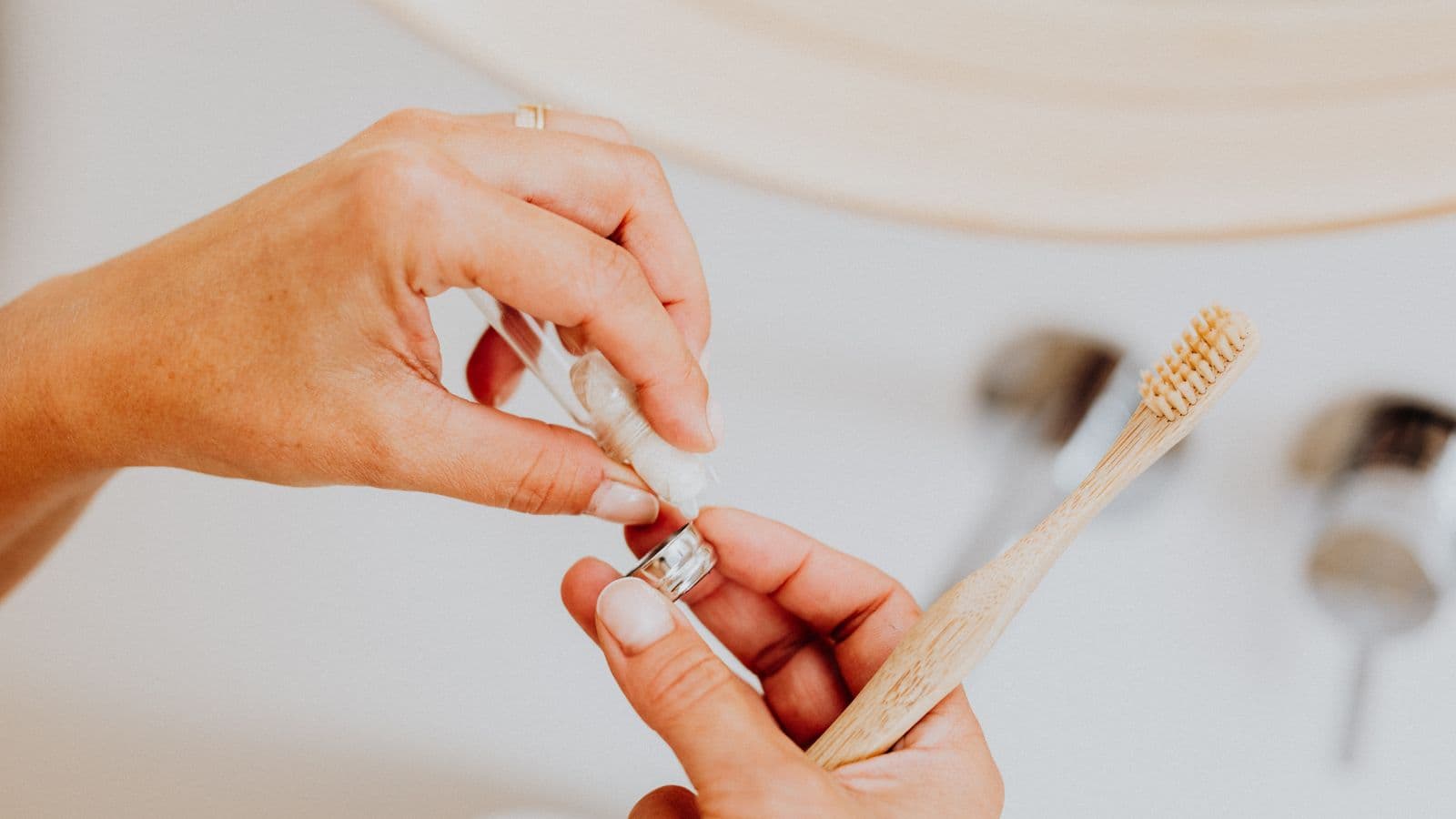
Brushing your teeth is probably the most routine health habit you have. But according to Sweden's National Board of Health and Welfare (Socialstyrelsen) and the public health portal 1177 Vårdguiden, there are details that decide whether you're actually preventing cavities - or just moving toothpaste around in your mouth.
The basics
Both Socialstyrelsen and 1177 are clear about the foundation:
- Twice a day - morning and evening, every day
- Two minutes per session, distributed evenly across all surfaces
- Fluoride toothpaste with at least 1450 ppm fluoride - the standard in adult products
- A pea-sized amount is enough - more is not better
1177 Vårdguiden summarises the advice on its toothbrushing page: brush every morning and evening, use fluoride toothpaste, and take it slow - systematic beats fast.1
The most important step most people miss
Here's the detail that decides how much fluoride you actually benefit from: spit - don't rinse.
After brushing, spit out the excess toothpaste but don't rinse your mouth with water. The reason is simple: when you rinse away the toothpaste residue, you also rinse away the fluoride that just settled as a protective film on your enamel. The fluoride you let stay keeps remineralising your teeth for several hours afterwards.
This is one of the most evidence-based recommendations in caries prevention, and is endorsed by both Folktandvården and 1177.
Manual or electric toothbrush?
The Swedish Agency for Health Technology Assessment (SBU) has reviewed the research: oscillating-rotating electric toothbrushes are slightly more effective than manual brushes at reducing plaque and gingivitis.2 But the difference isn't large enough to call a manual brush (with correct technique) a bad choice - what matters most is time and technique, not the tool.
Correct technique: how to brush every tooth
1177 recommends starting in one place and working your way systematically around all teeth - outside, inside, and chewing surfaces. Angle the brush about 45 degrees towards the gum line to reach the pocket between tooth and gum, where plaque collects.
Don't forget the inside of the front teeth - it's easy to miss. Hold the brush vertically and use short strokes.
What Socialstyrelsen says about fluoride concentration
In its national guidelines for dental care, Socialstyrelsen prioritises fluoride toothpaste as the single most important tool for individual caries prevention.3 For adults and children from age 6, 1450 ppm fluoride is recommended. For younger children (0–5 years), lower concentrations and smaller amounts apply - see age-specific advice at 1177.
Summary - what to do
- Brush twice a day
- For two minutes each time
- With fluoride toothpaste 1450 ppm (adults and children over 6)
- A pea-sized amount is enough
- Spit - don't rinse
- Add floss or interdental brushes every day
If you follow this consistently, you've done most of what you can to prevent cavities. Not sure about your technique? Book a visit and we'll go through it together.